
Goldenrod in Ontario: Native Varieties, Harvesting, Drying & Uses
“In Ontario, goldenrod is an essential native species that strengthens ecosystems, supports biodiversity, and connects seasonal gardening with traditional herbal practice.”
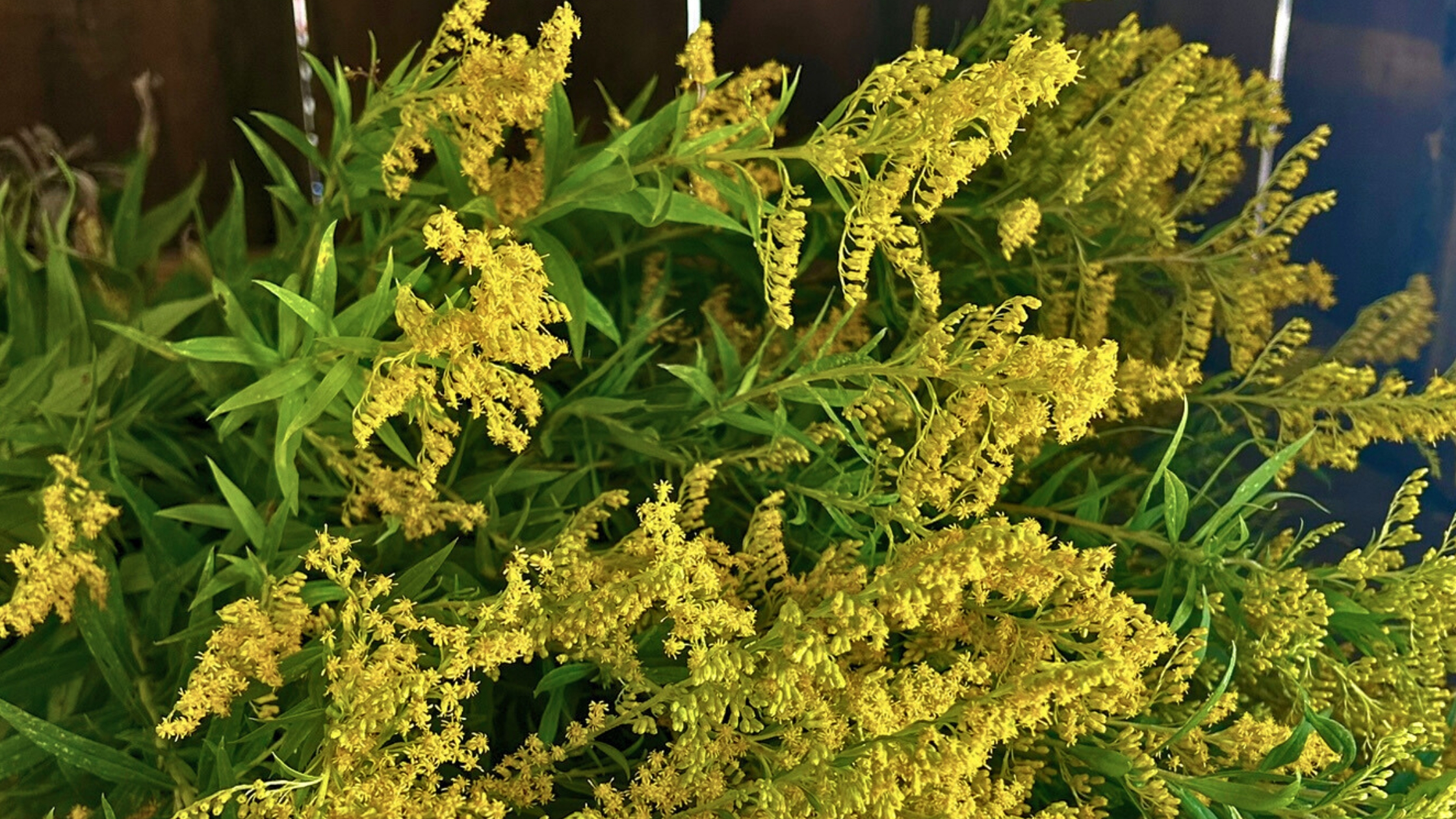
Goldenrod is one of the most ecologically significant native wildflowers in Ontario, yet it is often misunderstood and overlooked. Blooming in brilliant yellow plumes from late summer into early autumn, goldenrod belongs to the genus Solidago, a group of perennial plants native to North America. While many people mistakenly associate it with seasonal allergies, goldenrod pollen is heavy and insect-pollinated, meaning it is not typically carried by the wind. Ragweed, which blooms at the same time, is usually the true culprit.
Beyond its beauty, goldenrod plays an essential role in Ontario’s ecosystems, has a rich history of traditional use, and can be harvested and prepared thoughtfully for tea, syrups, and seasonal culinary creations. When approached respectfully and sustainably, goldenrod becomes a meaningful bridge between gardening, foraging, and seasonal living.
The History and Traditional Use of Goldenrod
Goldenrod has a long history in North American herbal traditions. Various Indigenous communities traditionally prepared goldenrod as an infusion and valued it for its aromatic and wellness-supportive properties. During the American Revolution, goldenrod tea was sometimes used as a substitute for imported tea and became symbolically associated with independence and resilience.
In botanical terms, goldenrod is classified as a perennial herbaceous plant. A perennial plant returns year after year from its root system, making it an enduring component of meadows, prairies, woodland edges, and open fields across Ontario. Its persistent root systems also help stabilize soil and support surrounding plant communities.
Although goldenrod has been traditionally used in herbal preparations, modern scientific research on its health applications is still evolving. For that reason, any herbal use should be approached thoughtfully, with an understanding that traditional knowledge and contemporary research are not always equivalent.
Native Goldenrod Varieties in Ontario
Ontario is home to multiple native species of goldenrod. Understanding species diversity is important, both ecologically and for accurate plant identification before harvesting.
Canada goldenrod (Solidago canadensis) is one of the most widespread species in Ontario. It grows tall, often forming sweeping drifts in fields and along woodland margins. Tall goldenrod (Solidago altissima) closely resembles Canada goldenrod and is frequently grouped with it due to similar growth habits and appearance. Showy goldenrod (Solidago speciosa) has larger, more structured flower clusters and is often found in prairies and well-drained open spaces. Early goldenrod (Solidago juncea) blooms slightly earlier in the season and prefers drier soils.
Correct identification is essential before harvesting any native plant. While goldenrod species are generally safe and beneficial, accurate identification ensures ecological integrity and personal safety.
Goldenrod’s Ecological Importance in Ontario
Goldenrod is a keystone late-season nectar plant. A keystone plant is one that supports a disproportionately high number of other organisms within an ecosystem. Because goldenrod blooms at a time when many other flowering plants have finished, it provides critical nectar and pollen resources for insects preparing for winter or migration.
Its presence enhances biodiversity, supports food webs, and contributes to the stability of native landscapes. In home gardens, goldenrod encourages beneficial insect populations and supports overall ecological resilience.
Rather than removing goldenrod from wild or garden spaces, allowing it to flourish can strengthen local ecosystems and improve seasonal pollinator support.
Responsible and Sustainable Harvesting
When harvesting any native plant in Ontario, sustainability must be the first priority. Goldenrod should only be harvested from areas that are free from chemical exposure and environmental contamination. Never harvest from roadsides, as these areas may be exposed to vehicle pollutants, herbicides, or other toxins. Avoid harvesting from protected lands unless explicit permission is granted. If harvesting on private property, always ask for permission first.
Only harvest a small portion of a healthy patch, leaving the majority of flowers intact to continue supporting pollinators and allowing the plant to set seed naturally. Responsible harvesting protects both the ecosystem and the future availability of the plant.
How to Harvest Goldenrod
Goldenrod should be harvested when the flower plumes are fully open and vibrant yellow, typically from late August through September in Ontario.
To harvest properly:
Use clean, sharp garden shears.
Cut the upper flowering portions of the plant, avoiding woody stems.
Gently shake the stems outdoors to remove any insects.
Process fresh or prepare for drying promptly after harvesting.
Fresh goldenrod can be used immediately for tea or syrup, or preserved through drying for year-round use.
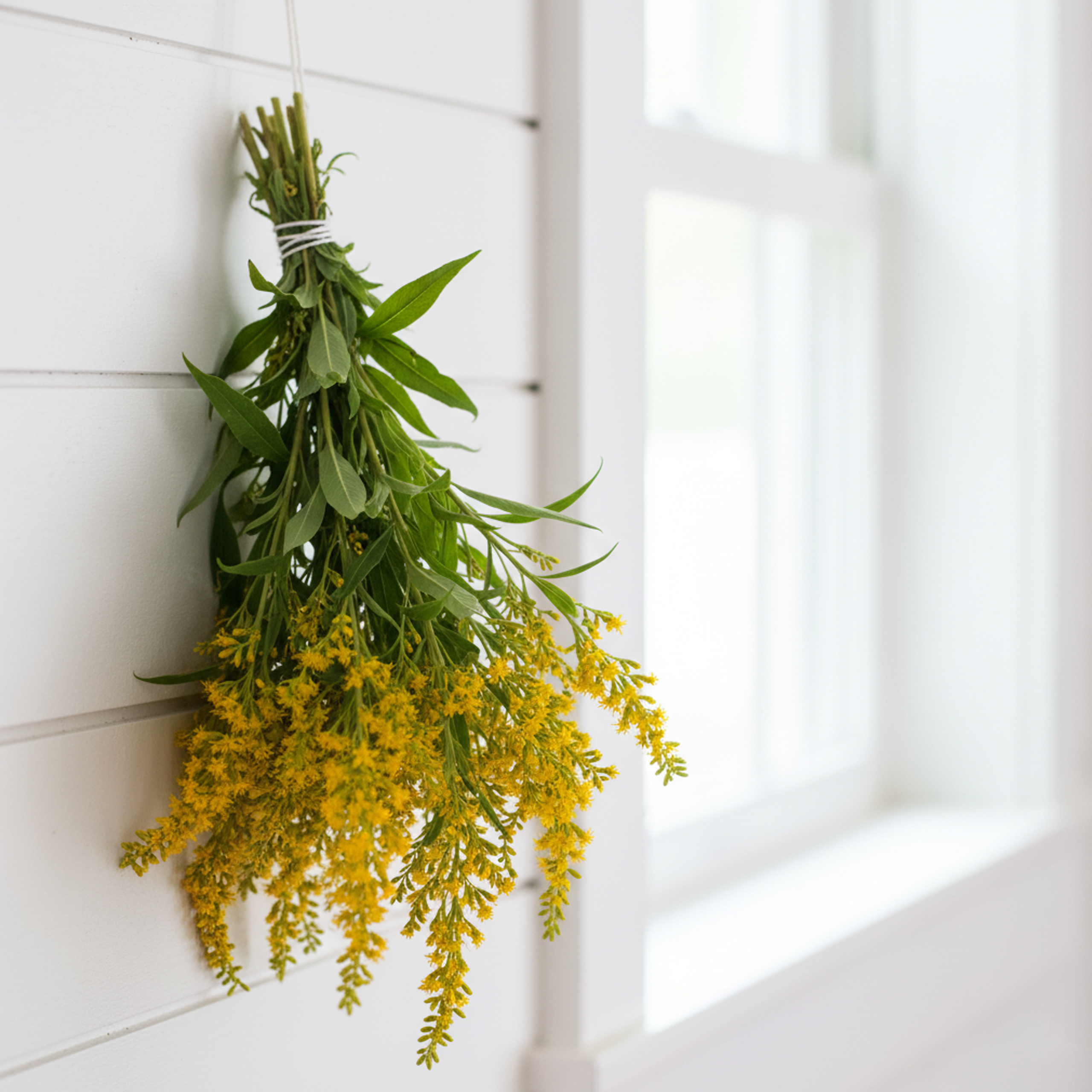
How to Dry Goldenrod (Traditional Hanging Method)
Drying goldenrod preserves its aromatic qualities and allows for long-term storage.
To dry goldenrod properly:
Gather small bundles of freshly cut stems.
Secure them loosely with twine.
Hang upside down in a cool, dry, well-ventilated space away from direct sunlight.
Allow approximately one to two weeks for complete drying.
Once fully dried, remove the flowers from the stems and store them in airtight glass containers in a dark, dry location. Proper storage helps maintain aroma and quality.
How to Make Goldenrod Tea
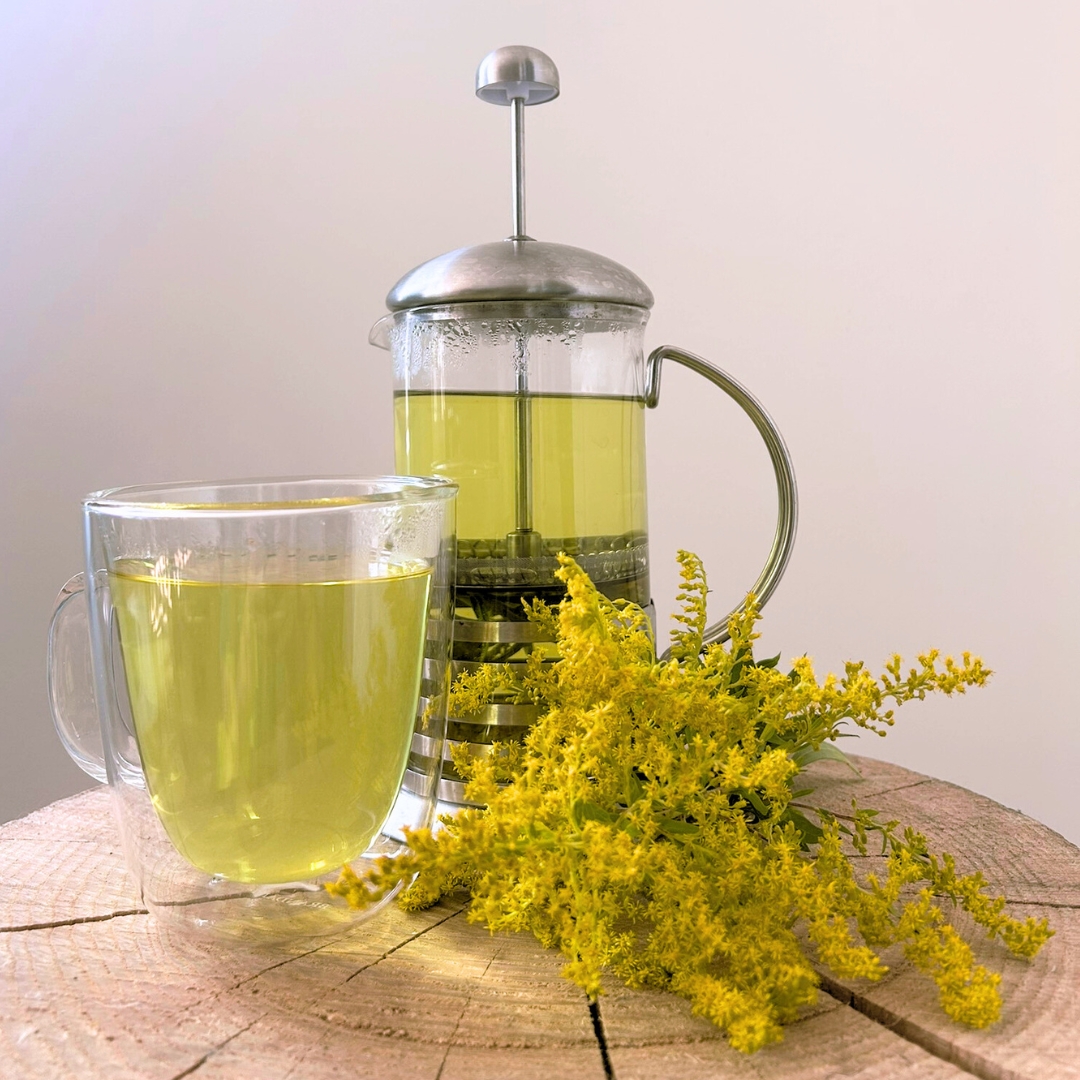
Goldenrod tea has a mild, floral, slightly earthy flavor that pairs beautifully with honey.
To prepare goldenrod tea:
Place 1–2 teaspoons of dried goldenrod (or 1–2 tablespoons fresh goldenrod) in a cup.
Pour 1 cup of hot water over the plant material.
Steep for 10–15 minutes.
Strain and add honey to taste.
Herbal teas have a long history in traditional practices; however, they are not a substitute for medical care. Individuals who are pregnant, nursing, taking medication, or managing health conditions should consult a qualified healthcare professional before consuming herbal preparations.
How to Make Goldenrod Simple Syrup
Goldenrod simple syrup captures the plant’s floral notes and transforms them into a versatile seasonal ingredient.
To prepare goldenrod simple syrup:
Combine 1 cup water and 1 cup granulated sugar in a saucepan.
Heat gently until the sugar fully dissolves.
Add a small handful of fresh or dried goldenrod flowers.
Simmer lightly for 5–10 minutes.
Remove from heat and allow to steep for 30–60 minutes.
Strain and store in a sealed glass container in the refrigerator.
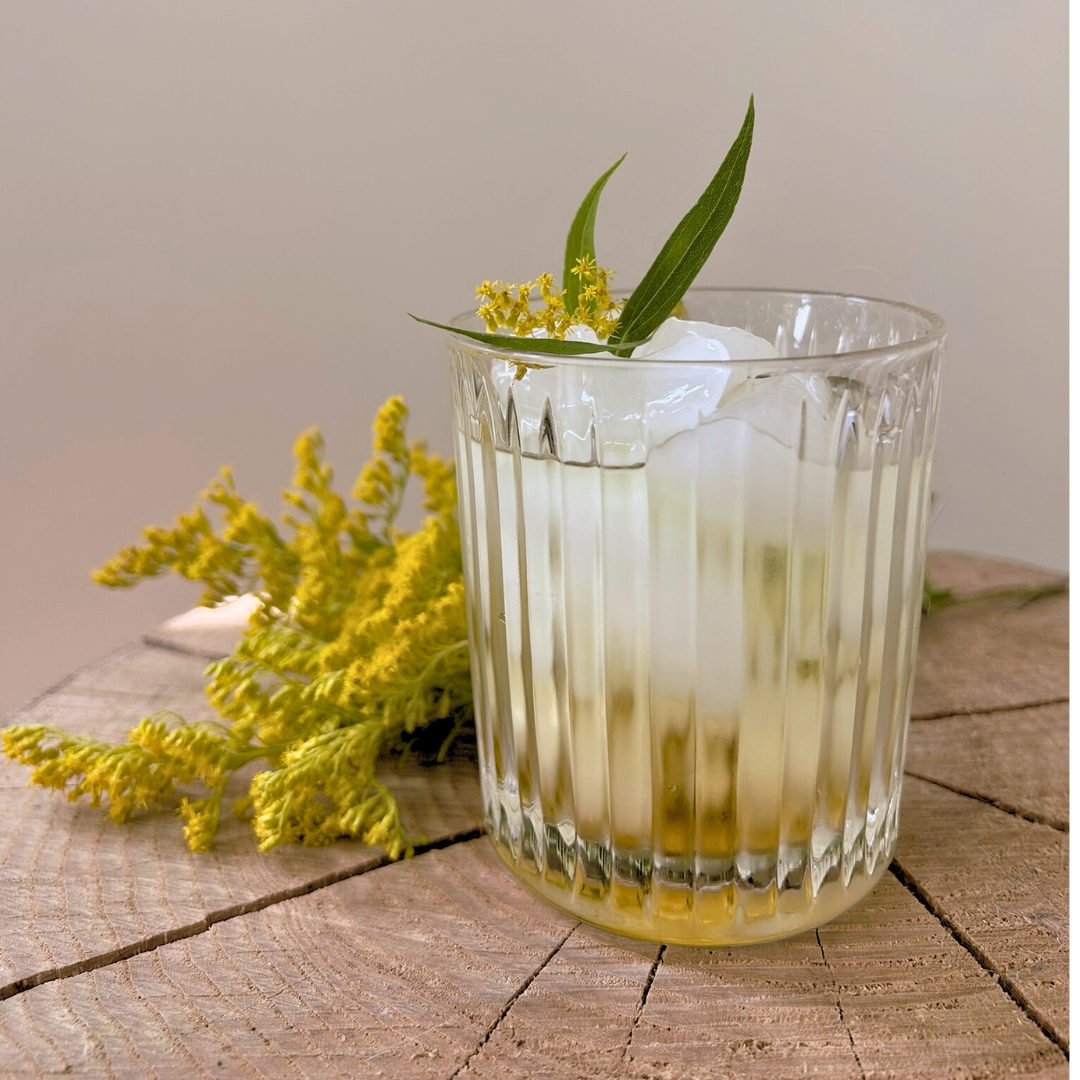
This syrup can be added to sparkling water, lemonade, iced tea, or cocktails.
Goldenrod Gold Rush Cocktail (Inspired Variation)
The classic Gold Rush cocktail traditionally contains bourbon, fresh lemon juice, and honey syrup. A goldenrod syrup variation adds subtle floral complexity.
To make a Goldenrod Gold Rush:
Prepare honey syrup by combining equal parts honey and hot water, stirring until fully dissolved, then allowing it to cool.
In a cocktail shaker filled with ice, combine:
2 ounces bourbon
¾ ounce freshly squeezed lemon juice
¾ ounce goldenrod simple syrup (or honey syrup for the traditional version)
Shake vigorously until well chilled.
Strain into a rocks glass over fresh ice.
Always consume alcohol responsibly.
Herbal Use Disclaimer
This article is provided for educational purposes only. Goldenrod has a history of traditional use, but it is not intended to diagnose, treat, cure, or prevent any disease. Herbal preparations should be used thoughtfully and under the guidance of a qualified healthcare professional.